Vegetables · Growing Guide
Scarlet Kale
Variety: Scarlet · Brassica oleracea var. sabellica
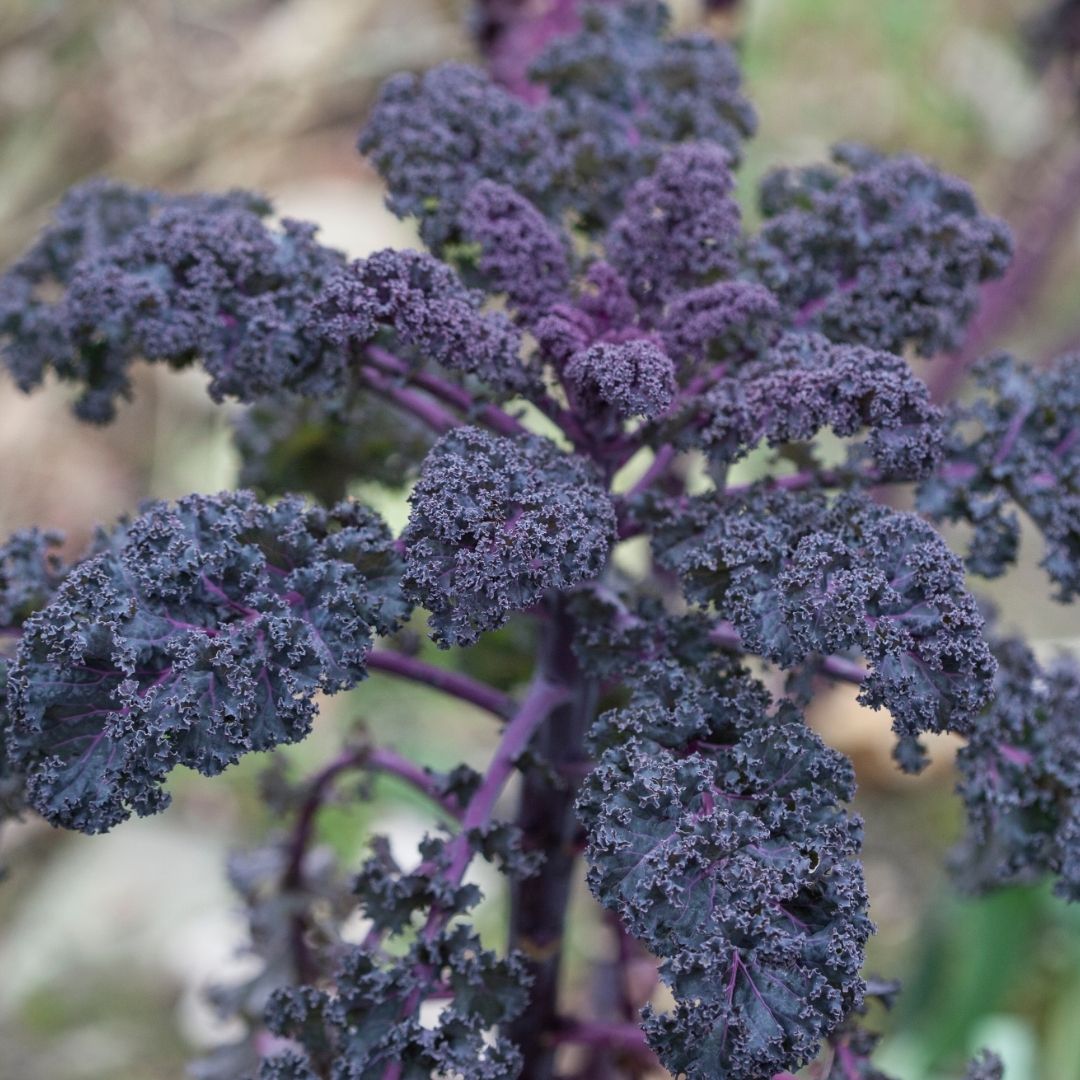
Scarlet Kale is a jewel-toned, cold-hardy leafy green with deep purple-red frilled leaves and green veins. Sweet and tender after a cool snap, it is one of the most forgiving and rewarding vegetables for home gardeners in Thailand's cool season.
- Difficulty: easyLeafy greenOutdoorGermination: 6–10 daysHarvest: 30–40 days for baby leaves; 55–80 days for mature leaves
Plant overview
Scarlet Kale is prized for its striking magenta color and mild, nutty flavor. Leaves grow in a loose rosette on tall stems and can be harvested continuously for months. Because kale is a "cut-and-come-again" crop, a single plant can feed a household for an entire cool season. Cold weather sweetens the leaves as the plant converts starches to sugars — a light morning frost can noticeably improve the taste.
Quick facts
6+ hours full sun
Consistent moderate
Loose, fertile loam
15–24°C ideal
30–45 cm apart
25 cm deep min
5–10 days
55–85 days
Climate & growing season
Best suited to cool to mild growing conditions with plenty of sunlight. Scarlet Kale tolerates cool temperatures well and its leaf color can become more intense in cooler conditions. In prolonged heat, provide consistent moisture and light afternoon shade where needed to reduce heat stress.
Scarlet Kale performs best when day temperatures stay between 15–24°C. In Thailand this means November through February in the central plains, and October through March in the north and highlands. Above 30°C the plant slows growth, leaves toughen, and flavor turns bitter. In warmer regions, grow in partial afternoon shade, mulch heavily to cool the roots, and time sowing so plants mature during the coolest weeks of the year.
Seed starting
Sow seeds about 1/4 inch deep in seed trays or small pots filled with a light, well-draining seed-starting mix. Keep the medium consistently moist but not waterlogged. Seeds usually germinate in about 6–10 days. After germination, provide bright light and good airflow to encourage strong, compact seedlings.
Transplanting
Transplant seedlings when they have 3–4 true leaves and are strong enough to handle. Harden them off gradually for 5–7 days before transplanting outdoors. Plant at the same depth they were growing in the seedling container, water thoroughly after transplanting, and protect young plants from strong afternoon sun during hot weather.
Sunlight
Scarlet Kale grows best with 6 or more hours of direct sunlight per day. During Thailand's cooler months, give it as much sun as possible. In hot weather, provide morning sun and some afternoon shade to reduce heat stress and leaf wilting.
Watering
Keep the soil consistently moist but not waterlogged. Water deeply when the top layer of soil begins to dry. During hot weather, check moisture daily because containers can dry quickly. Water in the morning and avoid keeping the leaves constantly wet to help reduce disease.
Soil & growing medium
Use loose, fertile, well-drained soil rich in organic matter. A soil pH of about 6.0–7.0 is suitable. Mix compost or well-rotted organic matter into the soil before planting. Good drainage is especially important during Thailand's rainy season.
Fertilizing
Scarlet Kale is a moderate-to-heavy feeder and benefits from regular nitrogen for healthy leafy growth. Mix compost or well-rotted organic matter into the soil before planting. After transplanting, feed with a balanced fertilizer or nitrogen-rich organic fertilizer every 2–4 weeks according to the product instructions. Avoid excessive fertilizing, which can cause overly soft growth.
Growth timeline
- 1Stage 1
Sow seeds indoors
Day 0
- 2Stage 2
Germination
Day 5–10
- 3Stage 3
True leaves appear
Day 14
- 4Stage 4
Harden off & transplant
Day 28–35
- 5Stage 5
Established in garden
Day 40
- 6Stage 6
First baby-leaf harvest
Day 55–65
- 7Stage 7
Full-size leaf harvest
Day 75–85
- 8Stage 8
Continuous harvest
Up to 4 months
Harvesting
Baby leaves can be harvested when they are about 3–4 inches long, usually around 30–40 days after sowing. For mature leaves, begin harvesting around 55–80 days. Pick the older outer leaves first and leave the younger center leaves growing so the plant can continue producing. Harvest in the cool morning hours for the best freshness and quality.
Pests & diseases
Watch for aphids clustering on the undersides of young leaves, cabbage loopers and diamondback moth caterpillars chewing holes, and flea beetles peppering leaves with tiny pinholes. Rinse aphids off with a strong spray of water or spot-treat with neem oil. Handpick caterpillars in the morning or use Bt (Bacillus thuringiensis) as a targeted, organic control. Powdery mildew and downy mildew appear in humid conditions — improve air flow, water at the base, and remove affected leaves promptly.
Frequently asked
Was this guide helpful?
Need more help?
Our team at Amor EcoFarm is happy to answer growing questions from Thai gardeners. Reach out on LINE for the fastest reply or send us a message.