Vegetables · Growing Guide
Lacinato (Dinosaur) Kale
Variety: Lacinato (Nero di Toscana) · Brassica oleracea var. sabellica
Lacinato Kale, also known as Black Tuscan or Dinosaur Kale, is an heirloom Italian variety prized for its long, narrow, deeply textured dark blue-green leaves. It has a milder, sweeter flavor than curly kale and holds its shape beautifully in salads, stir-fries, soups, smoothies, and roasted chips — making it a favorite among home cooks and gardeners in Thailand.
- Difficulty: easyLeafy VegetableOutdoorGermination: 5–10 daysHarvest: Baby leaves: 30–40 days | Full size: 55–65 days
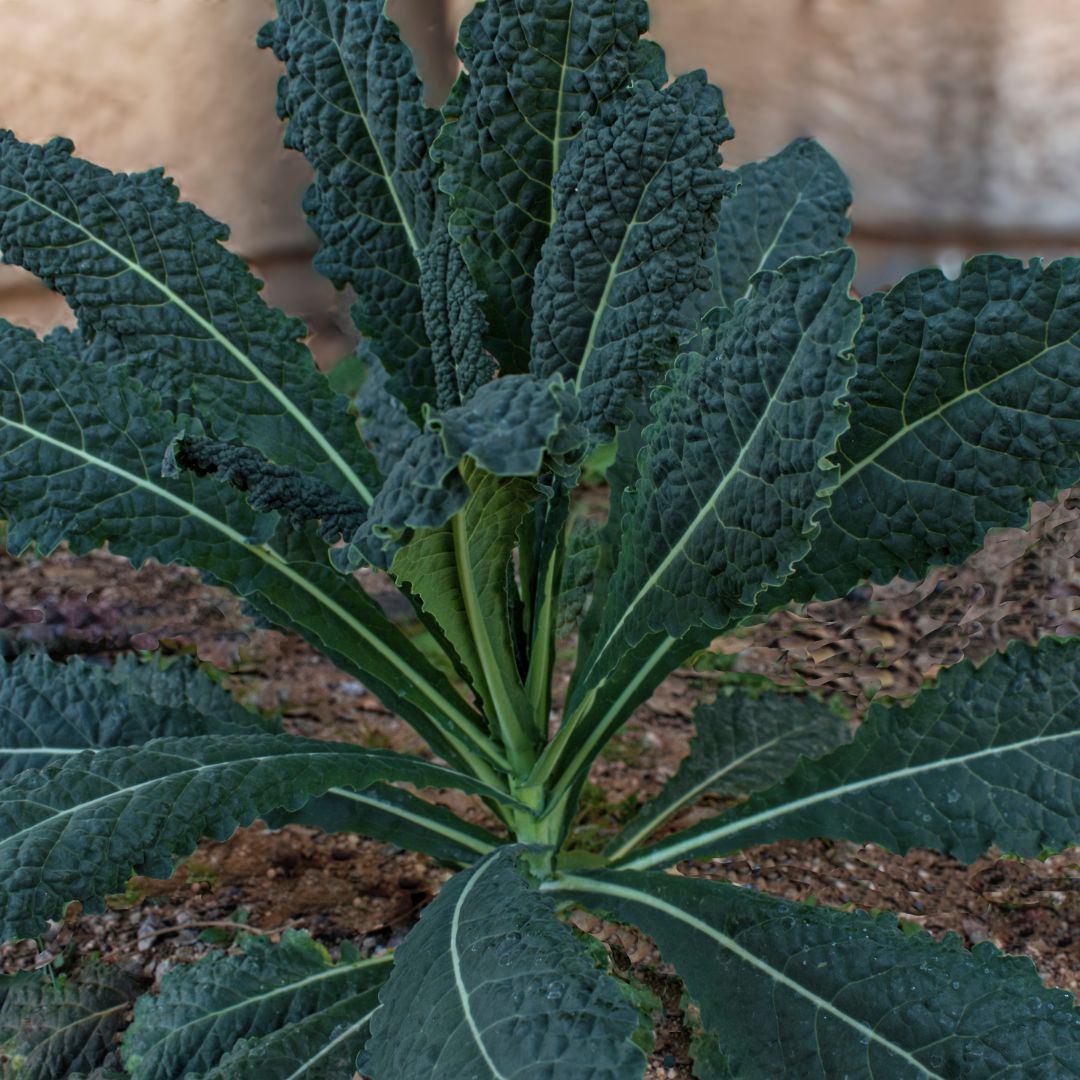
Plant overview
Lacinato Kale is one of the most rewarding leafy greens you can grow at home. The plant forms an upright rosette of strap-like leaves that can be harvested continuously for months using the "cut-and-come-again" method. Each plant produces new leaves from the center while older outer leaves are picked, giving you a steady supply of nutrient-dense greens from a small space. In Thailand's climate, Lacinato Kale thrives during the cool, dry months from October through February, especially in Chiang Mai, Chiang Rai, and other northern highland areas. It can also be grown successfully at lower elevations in containers on shaded balconies during the cool season. The variety tolerates light frost — which actually sweetens the leaves — and is more heat-tolerant than many other kale varieties, extending your harvest window. Nutritionally, Lacinato Kale is a powerhouse: rich in vitamins A, C, and K, calcium, iron, and antioxidants. Its tender-yet-sturdy texture makes it versatile in the kitchen — massaged raw for salads, quickly wilted into pad-style stir-fries, blended into green smoothies, or crisped in the oven for healthy snacks. Growing your own guarantees pesticide-free leaves and dramatically better flavor than store-bought imports.
Climate & growing season
Cool season in Thailand (Oct–Feb); year-round in highlands
Seed starting
Start seeds indoors 4–6 weeks before the cool season begins, or sow directly outdoors from late September. Plant seeds 0.5–1 cm deep in seed trays with a light seed-starting mix. Keep moist and warm (20–25°C). Germination occurs in 5–10 days.
Transplanting
Transplant seedlings when they have 4–5 true leaves, usually 3–4 weeks after sowing. Harden off for a week by gradually exposing them to outdoor conditions. Transplant in the evening or on cloudy days to reduce transplant shock, and water thoroughly.
Sunlight
Give Lacinato Kale at least 5–6 hours of direct sunlight daily. In Thailand's hot lowlands, morning sun with afternoon shade produces the best-tasting, most tender leaves and prevents bolting. In cooler northern regions, full sun all day is ideal.
Watering
Water deeply 2–3 times per week to keep the soil evenly moist but never waterlogged. Mulch around the base with rice straw or dried leaves to retain moisture and cool the roots. Water in the morning to prevent fungal disease.
Soil & growing medium
Use rich, loamy soil mixed generously with compost or well-aged manure. Aim for pH 6.0–7.5. Good drainage is essential — mix in coco coir or rice husk to prevent root rot during heavy rain.
Fertilizing
Kale is a heavy feeder. Mix compost into the planting hole at transplant time. Feed every 2–3 weeks with a balanced organic fertilizer or diluted liquid fish emulsion. Side-dress with compost mid-season for continued leaf production.
Harvesting
Begin harvesting baby leaves after 30 days, or wait 55–65 days for full-sized leaves. Pick outer leaves first, leaving the top 4–6 leaves in the center crown intact — the plant will keep producing for months. Harvest in the cool morning for the crispest leaves.
Was this guide helpful?
Need more help?
Our team at Amor EcoFarm is happy to answer growing questions from Thai gardeners. Reach out on LINE for the fastest reply or send us a message.